

About
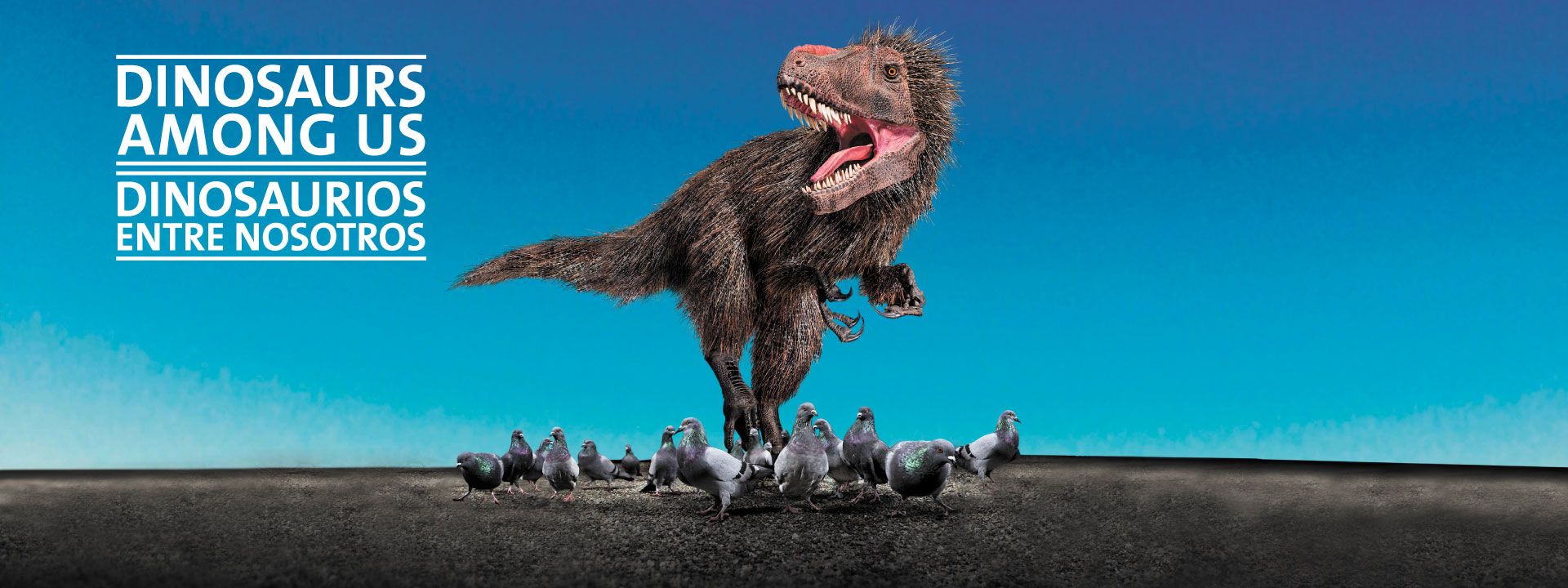
Life on Earth rose only once and is a product of evolutionary change. In fact, the animals we know as dinosaurs never went away. For around 170 million years dinosaurs dominated the landscape. Through an evolutionary process that took tens of millions of years, one dinosaur group gave rise to a new, small, airborne form: birds. In the ancient past, these now-extinct ancestors of birds and non-bird dinosaurs coexisted and competed for resources. This change resulted in the up to 18000 species of living birds we have discovered to date. Today, scientists have discovered so much fossil evidence that the boundary between the animals we call birds and the animals we traditionally called dinosaurs is now practically obsolete. In this exhibition, visitors will discover how dinosaurs’ extraordinary story continues today–not as the giant “terrible lizards” of the past, but as the feathered, winged birds both on land and in the sky we know today. The age of the Dinosaurs is now.
Dinosaurs Among Us is organized by the American Museum of Natural History, New York (amnh.org)with support from Museo de Ciencias, Universidad de Navarra, Spain; North Museum of Nature and Science, United States; Philip J. Currie Dinosaur Museum, Canada; and Universum Museo de las Ciencias de la UNAM, Mexico.
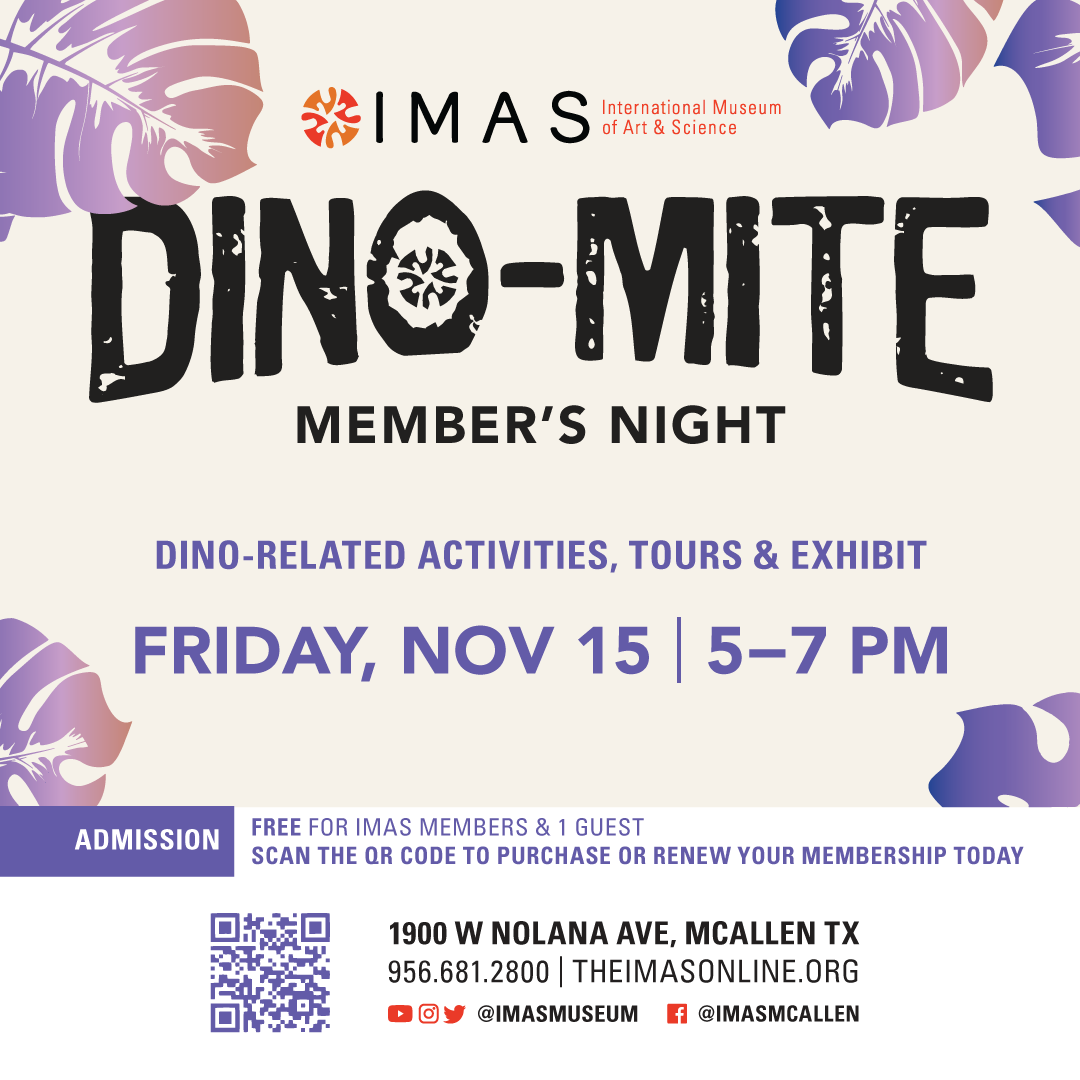
DINO-MITE Member’s Night
November 15, 2024
5:00 p.m. – 7:00 p.m.
Be the first to explore this new exhibit at the IMAS, Dinosaurs Among Us / Dinosaurios entre nosotros, opening to the public that same weekend!
- Explore IMAS after hours with special dinosaur-related activities!
- Complimentary Kairos Coffee
- NEW Dinosaurs Among Us Exhibit
- Dino-related activities and fun!
Enjoy Kairos Coffee while you learn about Dinosaurs Among Us, play in The Studio exhibit, and participate in all that IMAS has to offer.
This event is free for members and one of a series of exhibit previews and special experiences reserved for IMAS Members. Learn more about membership and join today! Membership may be purchased at the door or online in advance.
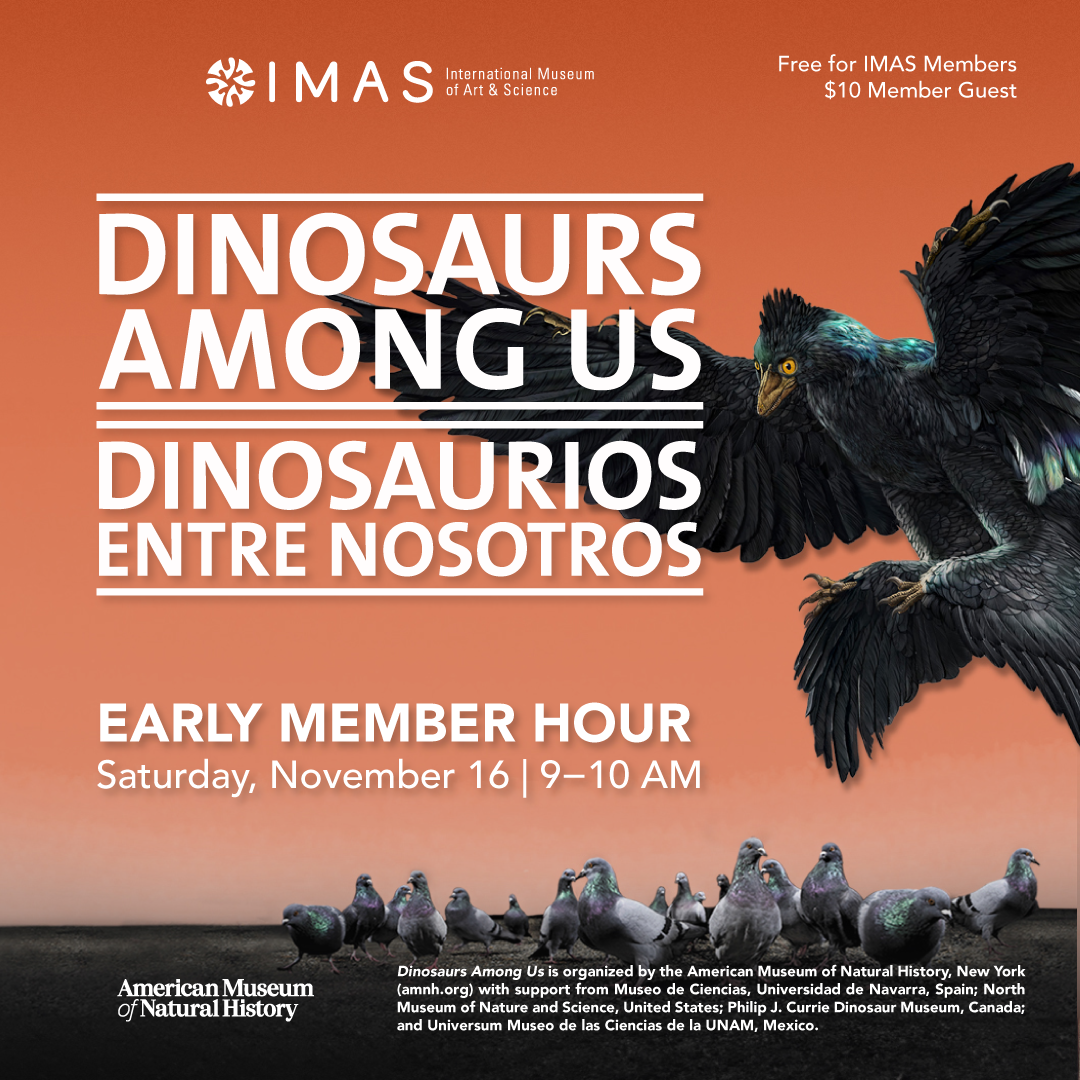
Early Member Hour for Dinosaurs Among Us
November 16, 2024
9:00 a.m. – 10:00 a.m.
Start your morning at IMAS with Early Member Hour! Explore the new exhibit, Dinosaurs Among Us / Dinosaurios entre nosotros, opening to the public on Saturday, November 16, 2024!
IMAS Members get early access for a bonus hour of exploration at 9:00 AM on November 16, an hour before the general public. Pre-registration is recommended.
This event is free for members and one of a series of exhibit previews and special experiences reserved for IMAS Members. Learn more about membership and join today! Membership may be purchased at the door or online in advance.
Sobre
La vida en la Tierra surgió solo una vez y es producto de un cambio evolutivo. De hecho, los animales que conocemos como dinosaurios nunca desaparecieron. Hace alrededor de 170 millones de años los dinosaurios dominaban el paisaje. A través de un proceso evolutivo que tomó decenas de millones de años, un grupo de dinosaurios dio origen a una forma nueva, pequeña y voladora: las aves. En el pasado antiguo, los ancestros de las aves y dinosaurios, ahora extintos, coexistieron y compitieron por los recursos. Este cambio dio como resultado las casi 18.000 especies de aves vivas que hemos descubierto hasta la fecha. Hoy en día, los científicos han descubierto tanta evidencia fósil que la línea entre los animales que llamamos aves y los animales que tradicionalmente llamamos dinosaurios está prácticamente obsoleta. En esta exposición, los espectadores descubrirán cómo la extraordinaria historia de los dinosaurios continúa hoy en día, no como los “terribles lagartos” gigantes del pasado, sino como las aves emplumadas y aladas, tanto en la tierra como en el cielo, que conocemos hoy. La era de los dinosaurios es ahora.
Dinosaurios entre Nosotros es organizado por el American Museum of Natural History, Nueva York (amnh.org)con el apoyo del Museo de Ciencias, Universidad de Navarra,España; North Museum of Nature and Science, Estados Unidos; Philip J. Currie Dinosaur Museum, Canadá; y el Universum Museo de las Ciencias de la UNAM, México.

