

About
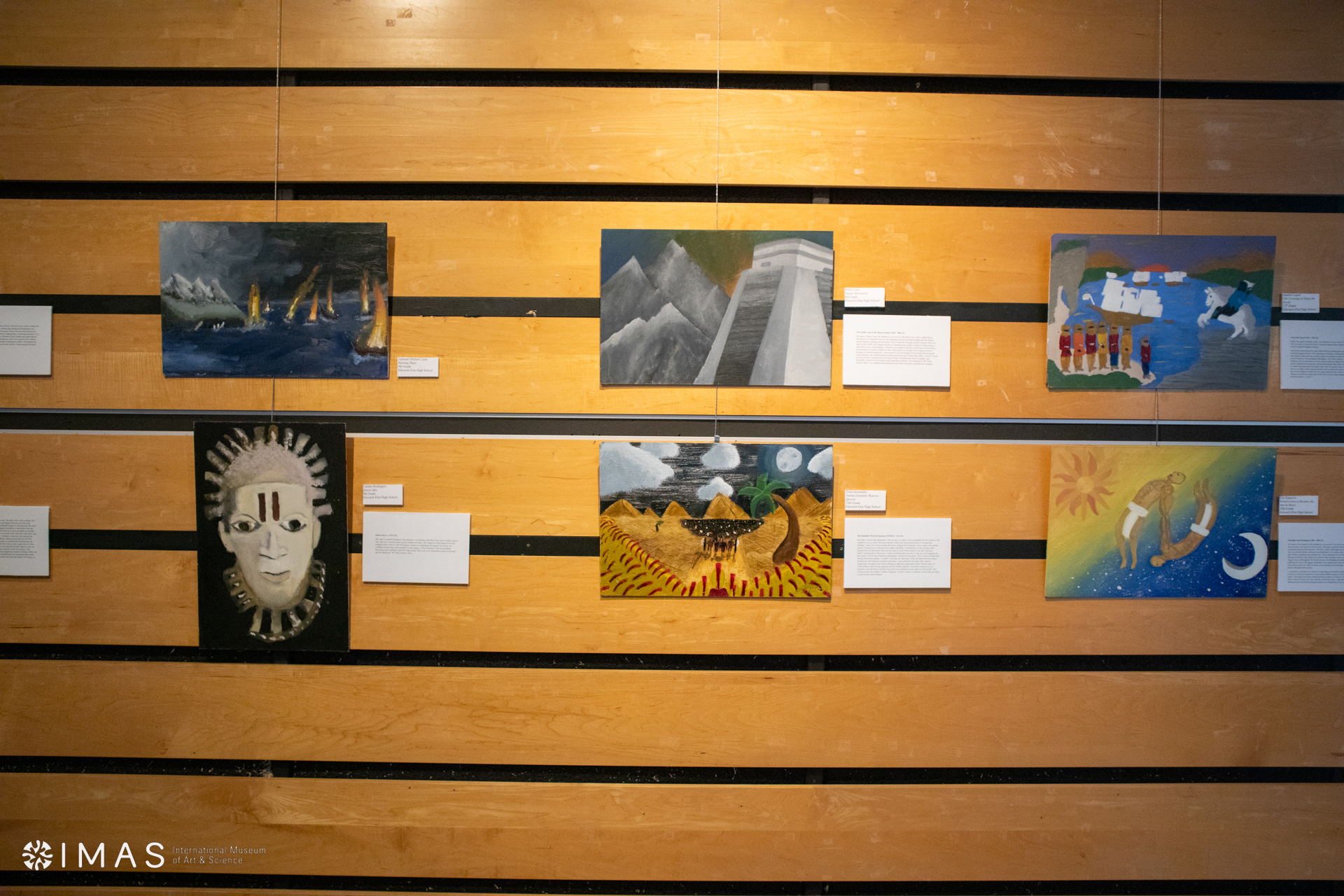
We Were Always There is a student-led exhibition that reclaims space for Latino and Black presence in the ancient and classical worlds—spaces from which we have been historically excluded. Created by high school artists at Edcouch-Elsa High School, the works reimagine Greco-Roman forms and Renaissance aesthetics to reflect stories of peoples who not only existed during these eras but thrived, traded, resisted, and contributed to global culture in profound ways.
Students draw on the visual language of classical art—bas-relief, mosaic, and oil painting—to tell the untold. Where history tends to focus on Zeus and Athena, David, the Medici, or the Sistine Chapel, we ask: what was happening in West Africa? In Sudan? In the Moorish courts of Spain? In Indigenous America? These works respond. They channel what has been overlooked: Afro-diasporic and Latino histories that unfolded alongside—but outside—the spotlight of dominant Western narratives.
The exhibition’s bas-relief pieces, tinted in tones from tan to deep black, subvert the white marble ideal and reclaim the classical body. Roman-style mosaics made from hand-cut plaster tesserae, and oil paintings rooted in cultural memory, continue this reclamation. Together, these works become our students’ own renaissance—a cultural reawakening through art, driven by identity, curiosity, and the desire to be seen. We Were Always There serves as both a tribute and a challenge: to expand the timeline of greatness and open space for the voices history forgot to include.


Sobre
We Were Always There una exposición dirigida por estudiantes que reclama espacio para la presencia latina y negra en los mundos antiguos y clásicos, espacios de los que históricamente hemos sido excluidos. Creadas por artistas de secundaria en la Escuela Edcouch-Elsa, las obras reinician formas greco-romanas y estéticas renacentistas para reflejar historias de pueblos que no sólo existían en estas épocas, sino que prosperaban, comercializaban, resistieron, y contribuyeron a la cultura global de formas profundas.
Los estudiantes se basan en el lenguaje visual del arte clásico, bajo-relieve, mosaico y pintura al óleo, para decirle a los incalculables. Donde la historia tiende a centrarse en Zeus y Athena, David, los Médici, o la Capilla Sixtina, preguntamos: ¿qué estaba pasando en África occidental? ¿En Sudán? ¿En los tribunales moros de España? ¿En América Indígena? Estas obras responden. Canalizan lo que se ha pasado por alto: historias afro-diásporas y latinas que se desarrollaron junto a -pero fuera- el foco de las narrativas occidentales dominantes.
Las piezas de bajo-relieve de la exposición, tintadas en tonos de bronceado a negro profundo, subverten el ideal de mármol blanco y reclaman el cuerpo clásico. Los mosaicos de estilo romano hechos a mano de teserae de yeso cortado a mano, y pinturas al óleo arraigadas en la memoria cultural, continúan esta reclamación. Juntos, estas obras se convierten en el propio renacimiento de nuestros estudiantes, un despertar cultural a través del arte, impulsado por la identidad, la curiosidad y el deseo de ser visto. We Were Always There un tributo y un desafío: ampliar la línea de tiempo de la grandeza y el espacio abierto para las voces que la historia olvidó incluir.

